
Discover how affiliate links work, how clicks and sales are tracked, what affiliate cookies do and why some referrals don’t earn commission.
You’ve found a product you’d happily recommend.
You’ve joined its affiliate programme.
Then you’re given a strange-looking link containing numbers, letters and tracking information.
Now comes the obvious question:
How does that little link actually make you money?
The answer is simpler than it first appears.
An affiliate link is essentially an ordinary web link with an identifying marker attached to it. That marker tells the retailer or affiliate network that you sent the visitor.
If the visitor later makes an eligible purchase, the tracking system can connect that sale back to your referral.
That’s what turns a normal recommendation into a potential affiliate commission.
What Makes an Affiliate Link Different?
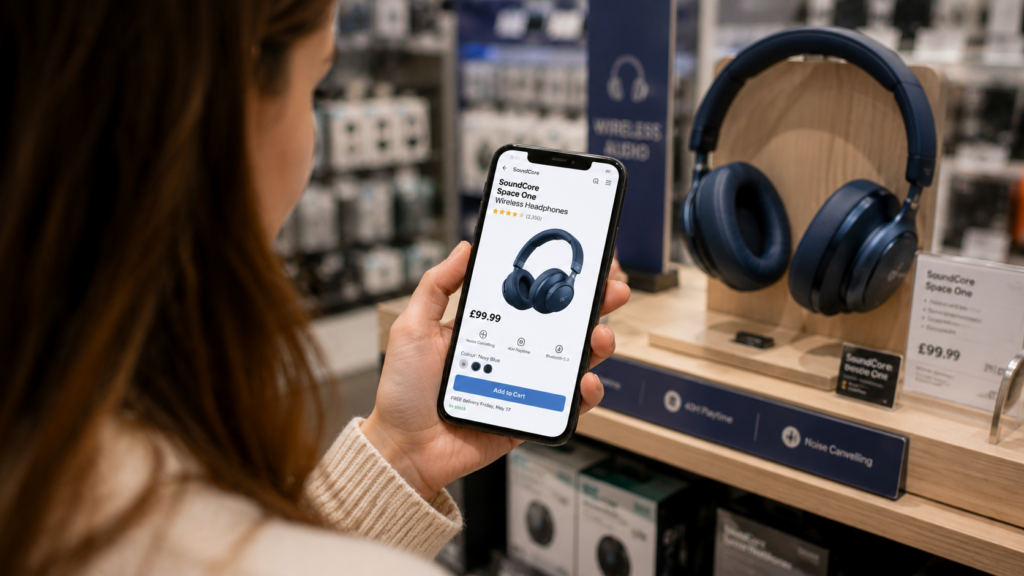
Suppose you recommend a pair of headphones on your website.
A normal link might send your reader directly to the retailer’s product page. The retailer knows somebody arrived, but it may have no reason to associate that visitor with you.
Your affiliate link contains information that identifies your referral.
When the reader clicks it, the affiliate system records the visit before sending them to the product or retailer you’ve recommended.
To the reader, everything happens almost instantly.
Behind the scenes, however, that click has started the tracking process.

What Happens When Somebody Clicks Your Affiliate Link?
Let’s follow one reader.
They’re reading your article because they’re looking for headphones suitable for working from home.
You mention a pair that could suit them and naturally link the product name within your article.
They click.
The affiliate system records information about that referral and sends them through to the retailer.
The reader can then browse the website normally.
They might buy immediately.
They might compare another model first.
They may even leave and come back later.
Whether you still receive commission can depend on the programme’s attribution and tracking rules.
This is where cookies enter the story.
What Is an Affiliate Cookie?
An affiliate cookie is a small piece of information used by many programmes to help remember that a visitor originally arrived through an affiliate referral.
Imagine the programme has a 30-day cookie period.
Your reader clicks your affiliate link on Monday but doesn’t buy anything.
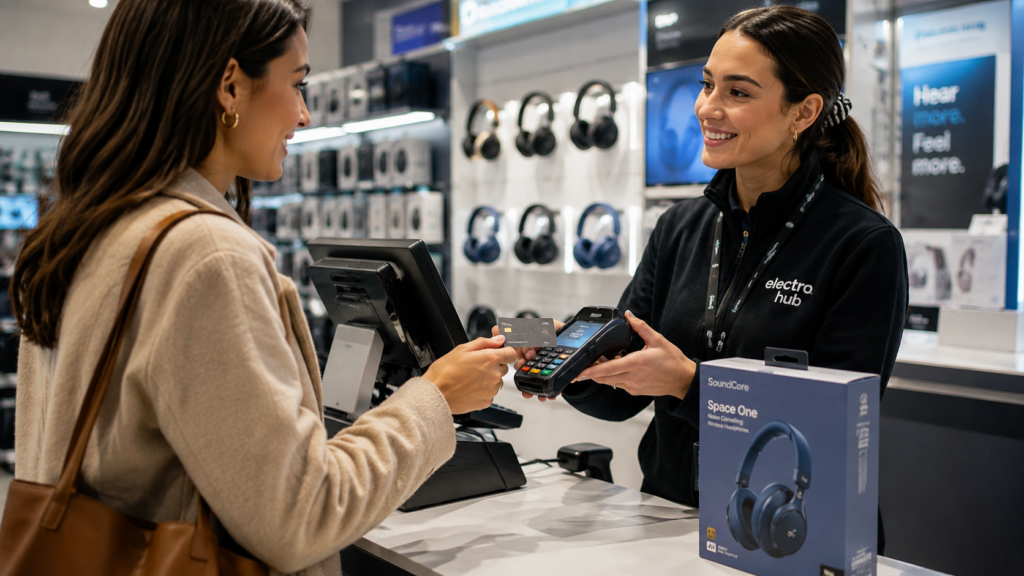
A week later, they return and complete the purchase.
Depending on the programme’s terms and what happened between those visits, the original referral may still be recognised and you could receive the commission.
This is why understanding cookie periods is useful when learning how affiliate commissions work.
The commission percentage tells you what a qualifying sale may be worth.
The tracking rules help determine whether that sale is attributed to you.
Readers Don’t Always Have to Buy Immediately
This surprised me when I first started learning about affiliate marketing.
A reader doesn’t necessarily have to click your link and immediately reach for their bank card.
People rarely shop like that anyway.
They compare prices. Read reviews. Talk to somebody. Make dinner. Forget about the product. Then remember it three days later.
A sensible tracking period allows for normal human buying behaviour.
However, don’t assume every affiliate programme works identically.
Cookie durations and attribution rules vary, which is another reason to read the terms when choosing an affiliate programme that’s right for you.
What Are Deep Affiliate Links?
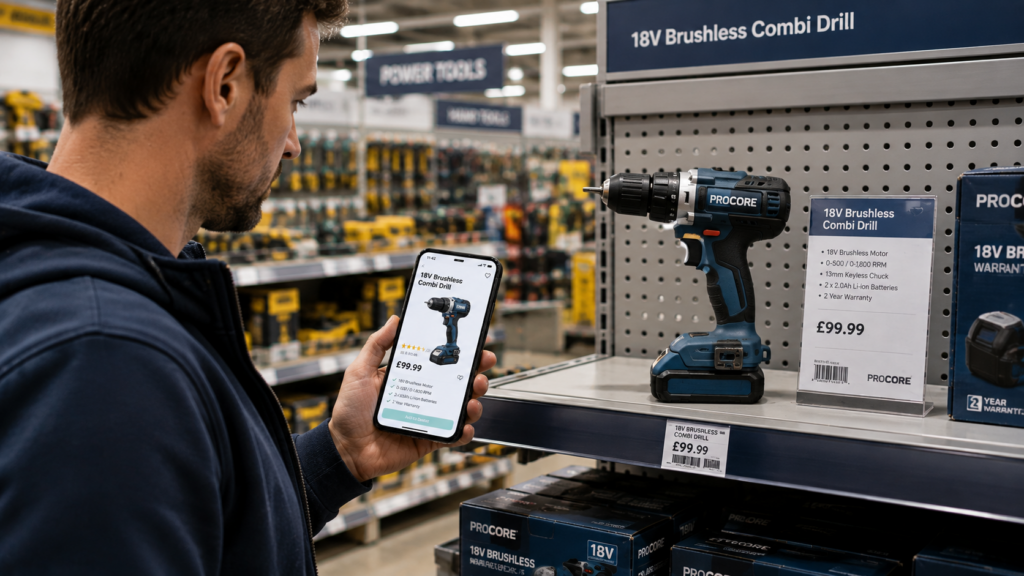
A deep link sends the reader to a specific page rather than simply dropping them on a retailer’s homepage.
If you’re discussing a particular cordless drill, for example, sending somebody directly to that drill is usually more useful than sending them to the front page of a huge DIY retailer and expecting them to find it themselves.
Good affiliate linking should make the reader’s journey easier.
That’s an important point.
The link exists to help the reader reach something relevant. The commission is what may happen afterwards.
That mindset stops your content becoming a collection of links desperately looking for clicks.
⭐ Steve’s Tip
Don’t turn every possible phrase into an affiliate link.
If you’ve just spent several paragraphs helping somebody understand which product could solve their problem, one well-placed natural link can be far more useful than repeatedly shouting BUY THIS at them.
Ask yourself:
“Would this link still be useful to my reader if I earned nothing from it?”
If the answer is yes, it’s probably in a sensible place.
Why Might an Affiliate Sale Not Track?
Affiliate tracking isn’t magic, and occasionally a sale you expected to see may not appear.
There can be several reasons.
The tracking period may have expired. The customer might have used another affiliate’s link later. A purchase may not qualify under the programme’s terms, or the tracking information may no longer be available.
Different programmes also use different attribution systems, so it’s dangerous to assume one set of rules applies everywhere.
This is why I wouldn’t obsess over individual clicks.
Instead, concentrate on recommending relevant products and creating content people genuinely find useful.
If you’re still deciding what deserves promoting in the first place, how to find affiliate products people actually want to buy is the better place to begin.
Your Affiliate Dashboard Closes the Loop
Once you’ve joined an affiliate programme, you’ll usually have access to some form of dashboard.
Depending on the programme, it may show things such as clicks, qualifying sales, pending commissions and payments.
This is where the invisible journey starts becoming visible.
A reader clicked.
Somebody purchased.
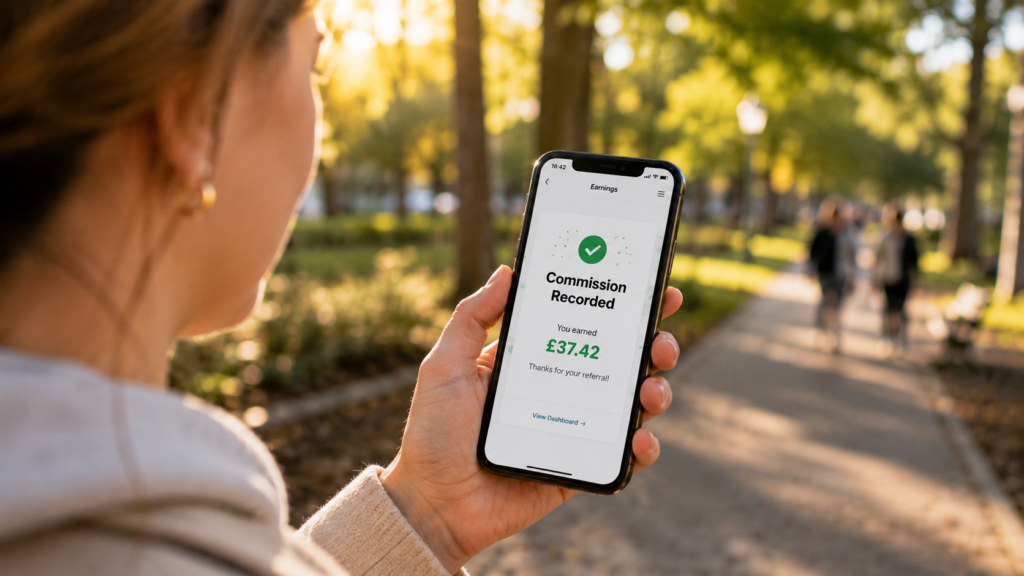
A commission appeared.
Seeing that first genuine conversion is an important moment because suddenly affiliate marketing stops being a theory.
It’s working.
But don’t become hypnotised by the dashboard.
Your job isn’t to stare at clicks all day.
Your job is to create something worth clicking in the first place.
Questions Readers Ask
Can people tell I’m using an affiliate link?
Affiliate URLs can contain tracking information, although their appearance varies. More importantly, affiliate relationships should be disclosed clearly where required so readers understand that you may earn from qualifying purchases.
Does clicking an affiliate link cost the reader more?
Normally, your commission is paid by the merchant or affiliate programme rather than being added as a separate charge to the customer’s purchase price.
How long does an affiliate link keep tracking?
That depends entirely on the programme. Some tracking windows are short, while others can last for days or weeks. Always check the programme’s current terms.
Can I use the same affiliate link more than once?
Generally, affiliate programmes provide links that can be used within relevant content, but individual programme rules differ. Don’t assume every programme allows exactly the same promotional methods.
💬 A Note from Steve
When I first came across affiliate links, they looked far more complicated than they really were.
All those extra letters, numbers and tracking codes made it seem as though I needed to understand some mysterious technical system before I could begin.
I didn’t.
What matters is understanding the principle.
I recommend something useful. The link identifies my referral. If somebody makes an eligible purchase under the programme’s rules, I may receive a commission.
Once I understood that, the link itself stopped being intimidating.
And I’m increasingly convinced that the less I think about getting somebody to click and the more I think about giving them a good reason to want to, the better Total Home Biz will become
📖 Your Next Step
Open one affiliate programme you’re already considering and find its linking or tracking information.
Look for three things:
How the programme creates your unique affiliate links, how long referrals can remain eligible for attribution, and where you can see clicks or qualifying sales.
You don’t need to master the entire dashboard.
Just understand the journey:
Your content → affiliate link → retailer → qualifying purchase → commission.
Once that makes sense, affiliate links become much less mysterious.
🧭 Keep Learning
If you’re at the beginning of the journey, how to start affiliate marketing will help you understand the foundations before you begin adding links to your content.
Then learn how to choose an affiliate programme that’s right for you and how to find affiliate products people actually want to buy.
Once those pieces are in place, understanding how affiliate commissions work will show you what happens financially when one of those carefully placed links finally produces a qualifying sale.

Steve Whelan shares practical tips, tools, and resources to help make building income online simpler and more approachable. Through this website, Steve provides helpful content and recommendations, including the Plug-In Profit Site, a system designed to help beginners get started online with a website, step-by-step training, and built-in income streams. Learn more about getting started with Plug-In Profit Site here: https://www.pluginprofitsite.com/main-51568/freesetup.html
1 thought on “How Affiliate Links Work: A Beginner’s Guide”