
Getting affiliate clicks but no sales? Discover seven common reasons readers don’t buy and what you can improve without rebuilding your entire website.
You open your affiliate dashboard.
There are clicks.
Actual people are reading your content, following your recommendations and visiting the products you’ve mentioned.
But the sales column?
Nothing.
It’s easy to look at that empty space and immediately think:
“What am I doing wrong?”
Possibly nothing.
Getting affiliate clicks but no sales can be frustrating, but a click and a purchase are two very different stages of somebody’s buying decision.
A click means you’ve created enough interest for somebody to investigate further.
That’s useful.
Now you need to understand what might be happening between that moment of interest and the final decision to buy.
1. A Click Doesn’t Mean Someone Is Ready to Buy
Think about how you shop online.
You see something interesting.
You look at it.
Maybe you check the price, read a few reviews and compare it with another product.
Then you might buy it.
Or you might not.
Your readers behave exactly the same way.
Someone clicking an affiliate link could be at the beginning of their research rather than the end.
This is especially common with more expensive products where people naturally take longer to decide.
So don’t treat every click as a failed sale.
Treat it as evidence that your content created interest.

2. The Reader’s Search Intent Might Be Wrong
Not every visitor arrives intending to spend money.
Someone searching:
“What is noise cancellation?”
probably has different intentions from someone searching:
“Best noise-cancelling headphones under £150.”
The first reader may simply want information.
The second is much closer to making a buying decision.
Both can be valuable visitors, but you shouldn’t expect them to behave identically.
This is why matching the product to what the reader actually came looking for matters more than simply adding affiliate links wherever you have traffic.
3. The Product Might Not Be the Right Fit
You can write an excellent article and still recommend the wrong product.
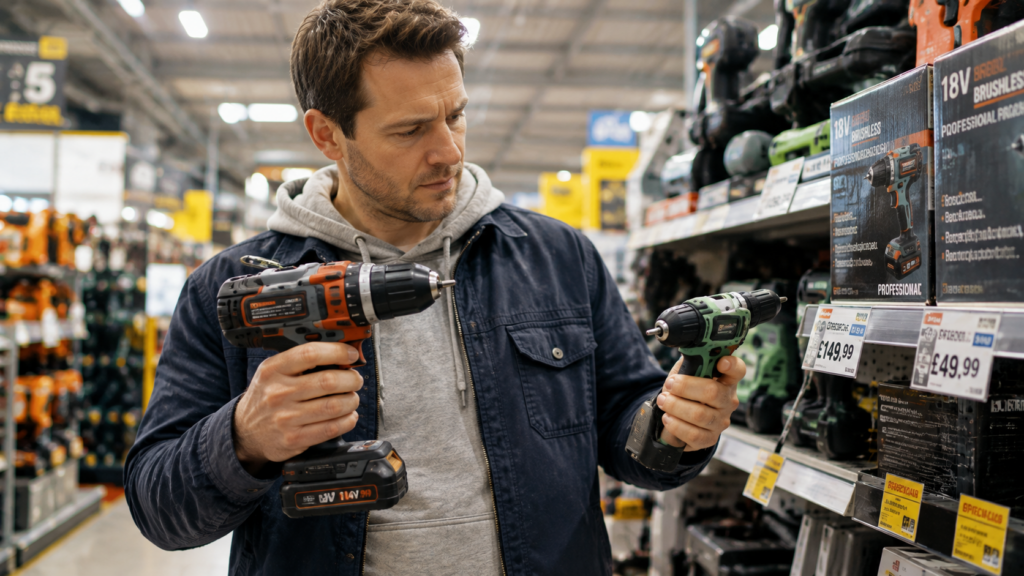
Imagine somebody wants a simple cordless drill for occasional jobs around the house.
You recommend a professional model costing £400.
It’s a great drill.
It’s simply not the right drill for that reader.
They may click because they’re curious, see the price and immediately leave.
That’s why finding affiliate products people actually want to buy isn’t about finding the product with the biggest commission.
It’s about understanding what your particular reader needs.
4. The Price Can Stop the Purchase
Sometimes your recommendation is good.
The reader likes the product.
Then they see the price.
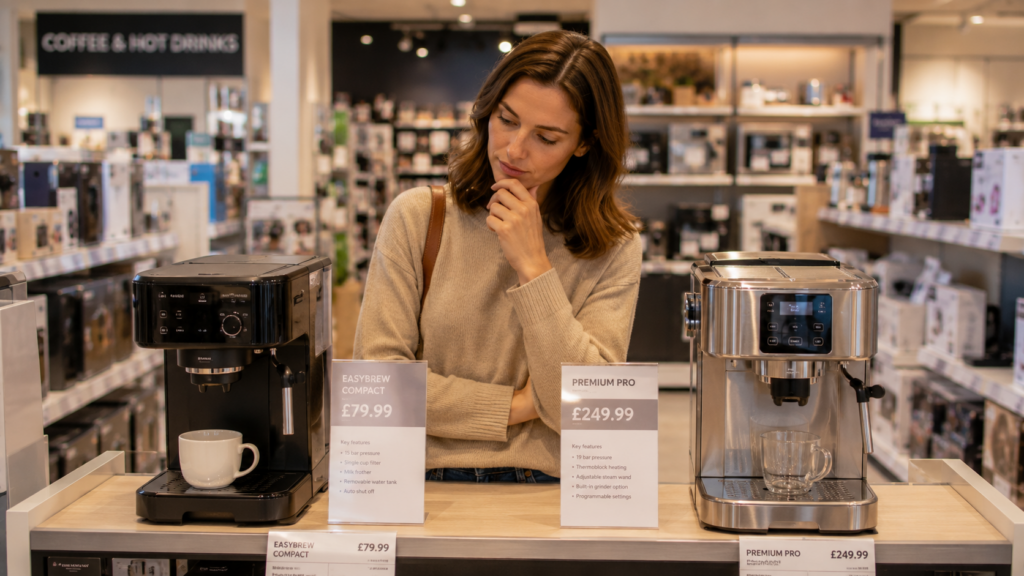
Buying decisions aren’t made in isolation. People have budgets, competing priorities and different ideas about what represents good value.
A £30 purchase may require very little thought.
A £900 purchase probably requires considerably more.
Higher-priced products can still make excellent affiliate recommendations, but expecting them to convert at the same rate as inexpensive everyday purchases isn’t realistic.
Give readers enough information to understand why something costs what it does.
Then let them decide whether the value makes sense for them.
⭐ Steve’s Tip
When somebody clicks but doesn’t buy, resist the urge to immediately change everything.
A handful of clicks isn’t enough information to diagnose a problem.
Instead ask:
“What was this reader hoping to find when they arrived?”
That question is usually more useful than:
“Why didn’t they buy?”
One keeps your attention on helping the reader.
The other can tempt you into chasing conversions.
5. Your Reader Might Not Trust the Recommendation Yet
Trust takes time.
If every product on your website is described as amazing, incredible or something everybody absolutely must own, readers will eventually notice.
Useful recommendations include limitations.
Perhaps the cheaper model is perfectly adequate for most people.
Perhaps the premium version is only worthwhile for somebody who needs one particular feature.
Perhaps you wouldn’t recommend the product at all for certain readers.
Saying those things can feel strange when you’re hoping to earn a commission.
But they’re precisely the details that make a recommendation believable.
That’s the principle behind writing honest affiliate product reviews: help somebody make the right decision, even when that decision isn’t the one that earns you money.
6. The Retailer’s Page Can Lose the Sale
Once somebody clicks your affiliate link, part of the buying experience leaves your hands.
The retailer takes over.
Their product page may be confusing.
The item could be out of stock.
Delivery might cost more than expected.
The checkout process might be awkward.
The customer could even find a better alternative while browsing the site.
You can’t control everything that happens after the click.
What you can control is where you send people.
Whenever possible, make sure your affiliate link leads to the most relevant useful page rather than making the reader hunt around for the product you just recommended.
That’s one reason where you put affiliate links and where those links actually lead both matter.
7. You Might Simply Need More Clicks
This may be the least exciting explanation.
It’s also one of the most important.
Suppose you’ve received 15 affiliate clicks and no sales.
That can feel disappointing when you’re checking the dashboard every morning.
But 15 clicks is a tiny sample.
Even if your content and recommendations are good, not every visitor will buy.
You need enough activity before patterns start becoming meaningful.
If you’re getting clicks, something is already happening.
People are finding your content.
They’re reading enough of it to notice your recommendations.
And they’re interested enough to investigate further.
Don’t destroy those positives because the commission hasn’t arrived as quickly as you’d hoped.

Questions Readers Ask
How many affiliate clicks does it take to get a sale?
There isn’t a fixed number. Results vary according to the product, audience, search intent, price, merchant and quality of the recommendation.
Why are people clicking my affiliate links but not buying?
They may still be researching, dislike the price, decide the product isn’t suitable or encounter something on the retailer’s website that changes their mind.
Should I replace a product if it isn’t making sales?
Not immediately. Look at the amount of data you have first. A small number of clicks may tell you very little about whether the recommendation is genuinely underperforming.
Does getting affiliate clicks mean my website is working?
Clicks are a positive signal that visitors are engaging with your recommendations, although clicks alone don’t tell you whether the entire affiliate strategy is working profitably.
💬 A Note from Steve
I know exactly how tempting it is to keep checking numbers when you’re building something online.
One visitor becomes five.
Five becomes ten.
Then you notice somebody has clicked an affiliate link and suddenly you’re waiting for the sale to appear.
But I’m trying to remind myself that real people are behind those numbers.
They aren’t conversions walking around with bank cards.
They’re people comparing things, changing their minds, checking their budgets and trying to make sensible decisions.
If Total Home Biz helps them do that, I’m doing something worthwhile.
The commissions can grow from there.

📖 Your Next Step
If you’re currently getting affiliate clicks but no sales, don’t start rebuilding your website today.
Choose one article that’s generating clicks and look at it from the reader’s point of view.
Ask yourself:
Does the product genuinely match the search?
Is the price realistic for the person I’m writing for?
Have I explained both the strengths and limitations?
Does the affiliate link lead somewhere useful?
And most importantly:
Do I actually have enough clicks to judge this yet?
Make changes because you’ve spotted a genuine weakness — not because an empty sales column made you panic.
🧭 Keep Learning
Understanding how affiliate links work and how your sales are tracked will help you see what happens between the initial click and a qualifying purchase.
If your links themselves need improving, where to put affiliate links in a blog post explains how to make recommendations part of the reading experience rather than an interruption.
From there, revisit how affiliate commissions work so you understand what happens when a sale finally qualifies, and keep strengthening your product choices with how to find affiliate products people actually want to buy.

Steve Whelan shares practical tips, tools, and resources to help make building income online simpler and more approachable. Through this website, Steve provides helpful content and recommendations, including the Plug-In Profit Site, a system designed to help beginners get started online with a website, step-by-step training, and built-in income streams. Learn more about getting started with Plug-In Profit Site here: https://www.pluginprofitsite.com/main-51568/freesetup.html
1 thought on “Affiliate Clicks but No Sales? Here’s Why”